


Practical guidance for controlling plant that moves between operations, contractors and work areas
Why Itinerant Registerable Plant Requires Careful Management
Workplaces across a range of industries regularly rely on mobile cranes, concrete placing booms, pressure equipment and other mobile plant supplied by contractors or hire companies. This is particularly common on mine sites and other industrial workplaces. This flexibility supports production and project delivery, but it can also leave the organisation using the plant with limited visibility of the plant’s history before it arrives on site.
Mobile plant has a higher interaction risk than most fixed plant because people operate it, work around it and may enter its operating envelope. Itinerant plant adds another layer of risk: the organisation using the plant may not own it, maintain it or control the records on which acceptance decisions depend.
A registration certificate is important, but it is not a safety approval and does not establish that an item is suitable for the proposed work, has been maintained correctly or remains safe in its current condition. The organisation must verify that the supplier is meeting its duty to provide safe plant before the item is used.
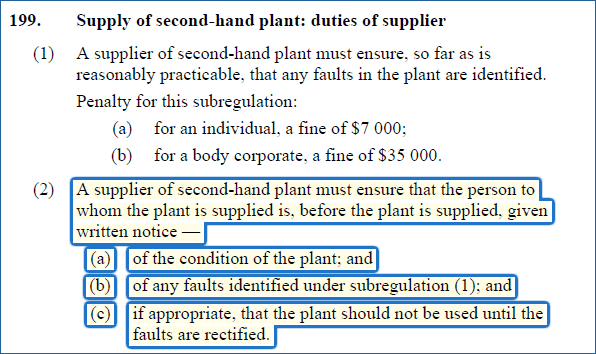
For second-hand plant, regulation 199 of the Work Health and Safety (General) Regulations 2022 requires the supplier, so far as is reasonably practicable, to identify faults and provide written information about the plant’s condition and identified faults. Where appropriate, the supplier must also advise that the plant should not be used until faults are rectified. The Code of Practice: Managing the risks of plant in the workplace states that supplier duties apply whether the plant is new, second-hand or hired out.
What Is Itinerant Registerable Plant?
For plant-registration purposes, itinerant registered plant is mobile registered plant that is not permanently based at the location recorded on its registration. Registered plant must be linked to a location or owner’s address, but the regulator recognises that mobile plant will not always be used at that address.
In practice, plant is commonly treated as itinerant where it moves between sites or work areas, is owned by a third-party supplier, or is hired or rented on an ad hoc basis by an organisation that does not maintain it. This distinguishes it from registered plant installed and managed as fixed plant at one operation.
Schedule 5 Division 2 of the Work Health and Safety (General) Regulations 2022 identifies the individual items that require plant registration, including:
- boilers and pressure vessels within the specified hazard levels, subject to listed exclusions
- tower cranes, including self-erecting tower cranes
- lifts, escalators and moving walkways
- building maintenance units
- specified amusement devices
- concrete placing booms
- mobile cranes with a rated capacity greater than 10 tonnes.
Each item must be assessed against the applicable legislation, registration requirements, technical standards, configuration, capacity and intended use. For further guidance, download AME’s Registerable Plant Registration and Inspection Requirements Guide.
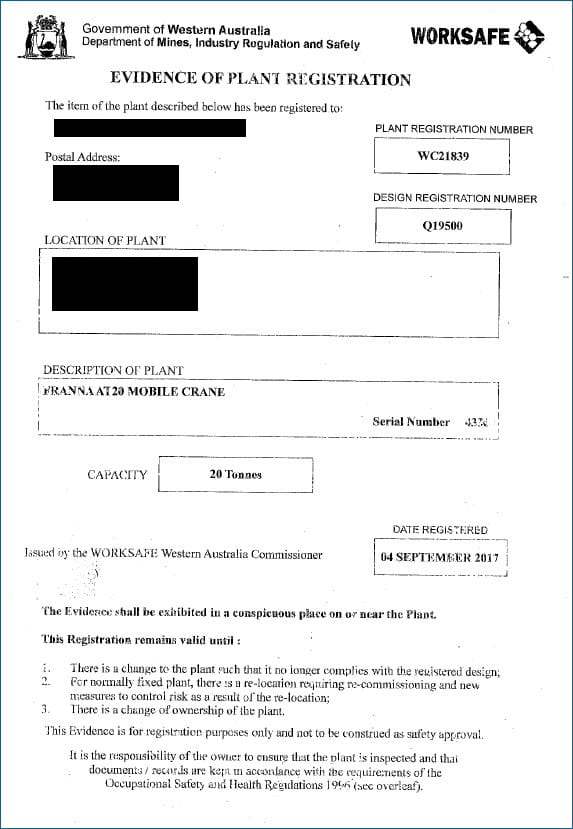
Below is an example of a plant registration certificate for itinerant plant. While it confirms registration, it should not be interpreted as confirmation that the plant is currently safe to operate.
Managing Itinerant Registerable Plant in the Workplace
The central control is a documented verification and acceptance process. Plant should not be permitted to operate simply because it arrives with an operator, a registration certificate and a job booking. The workplace should establish who has management or control of the plant, what the supplier must provide and who is authorised to approve its use.
1. Verify Documents Before Delivery
The most efficient time to resolve a documentation or inspection issue is before transport is arranged. Procurement packages, contractor scopes and hire agreements should clearly state the site’s plant acceptance requirements.
Before mobilisation, review the available records to confirm that the supplier has maintained the plant and that all required inspections and maintenance are current. Also confirm that the plant is suitable for its intended use, including the proposed task, operating environment and people who will use it.
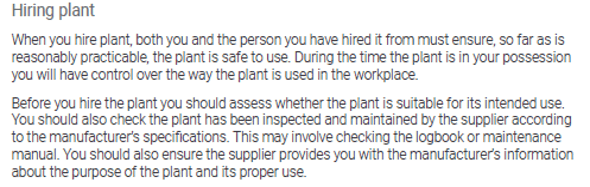
When plant is hired or leased, both the site and the plant owner have responsibilities for ensuring, so far as is reasonably practicable, that it is safe and without risks to health and safety. The site should therefore consult the owner about potential hazards and obtain relevant information about the plant’s condition, safe use, inspection requirements and maintenance history.
Extract from the WA Code of Practice: Managing Risks of Plant in the Workplace — “Hiring plant”.
2. Complete a Site Pre-entry Inspection
At the site gate or designated inspection area, confirm that the plant carries the required onboard documentation and that its identifiers match the submitted records. A visual inspection should check for leaks, corrosion, damage, missing guards and the presence of safety and warning devices. A functional check may be included in the site process, although operational checks remain part of the operator’s duties.
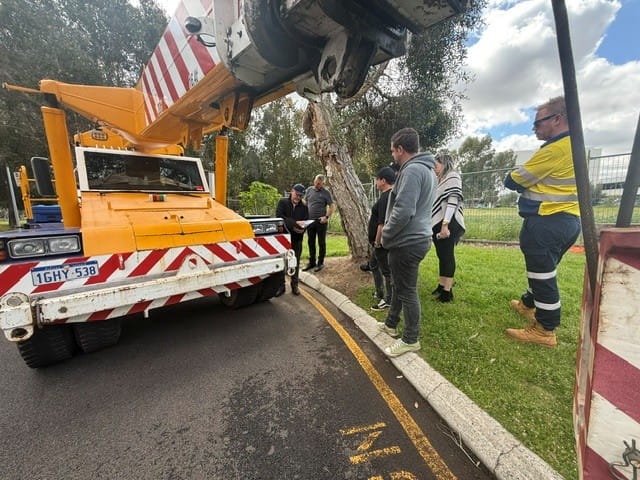
AME personnel conducting an itinerant plant inspection on a mobile crane.
3. Authorise and Record Site Use
Plant that meets the requirements should receive a clear form of site authorisation, such as an approval record, tag or sticker. Record the inspection, the person who completed it, any conditions of acceptance and the estimated contract completion date. Capturing the expected demobilisation date makes third-party plant easier to track and reduces the chance that it remains on site beyond an inspection or approval period.
4. Control the Plant Throughout Its Stay
Acceptance is only one point in the plant lifecycle. While the plant remains on site, its management should cover operation, inspection, maintenance, repair, transport, storage and eventual demobilisation.
The workplace should monitor pre-start inspections, reported defects, maintenance activities, changes in configuration, incidents and upcoming inspection due dates. Any changes in the plant’s condition, use or operating environment should also be reviewed to ensure existing controls remain effective.
A clear quarantine or out-of-service process is essential where required evidence is missing, an inspection becomes overdue or a defect could affect safe operation.
Establishing Effective Management Systems and Procedures
The management of itinerant plant should form part of the site’s mobile plant management plan or mine safety management system. A practical procedure connects procurement, contractor management, site access, engineering, maintenance, operations and document control.
A site-based procedure may differ between operations, but should generally include:
- a defined scope covering registered mobile plant and any additional plant subject to site verification
- supplier information and document requirements before delivery
- a pre-mobilisation document review and approval pathway
- a site pre-entry visual inspection and, where required, functional checks
- clear roles and authorisation limits for reviewers, inspectors and approvers
- a site register recording identity, owner, location, status, inspection dates and expected contract completion
- a visible approval method, such as a tag, sticker or controlled document
- defect classification, quarantine, escalation and return-to-service processes
- change management for alterations, repairs or configuration changes
- secure record retention, backup and retrieval arrangements
- audits and performance measures to identify recurring supplier, plant or system issues.
The process should be proportionate to risk but consistently applied. Informal approval through email chains or verbal confirmation makes it difficult to establish what was checked, who accepted the plant and whether outstanding actions were closed.
Make Records Readily Available
Records must be maintained within the workplace’s systems and produced when requested by an inspector. For registered plant, this should include records of testing, inspections, maintenance, commissioning, decommissioning, dismantling, repairs and alterations. These records must be retained while the plant is being used or until the person with management or control relinquishes control of it.
For itinerant plant, records should be readily accessible and should not depend on a single contractor contact or an external platform the workplace cannot reliably access. Digital systems such as Inspectivity can assist with recording inspections and approvals, managing corrective actions and tracking plant throughout its time on site.
Training, Competency and Inspections
The competency required depends on the task being performed. For a site’s itinerant plant pre-entry or verification inspection, there is no separate high risk work licence requirement simply because a person is completing that inspection. The PCBU should provide suitable information, training and instruction, and may use in-house training and a verification of competency process to authorise personnel.
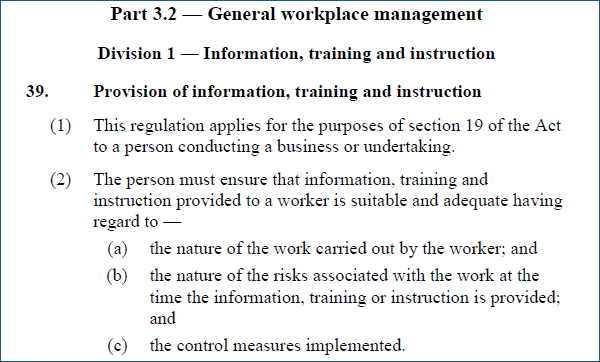
Regulation 39 requires information, training and instruction to be suitable and adequate having regard to the nature of the work, the associated risks and the control measures implemented. Sites should therefore define what an itinerant plant inspector must know, provide role-specific training and retain evidence of authorisation or competency.
This should not be confused with specialised technical inspections, maintenance or registration inspections. Those tasks may require a competent person with relevant engineering qualifications, technical knowledge, trade skills or experience, depending on the plant and work involved. One person may verify the site acceptance requirements, while another completes or certifies the underlying technical inspection.
Training should extend beyond inspectors and operators. Supervisors, contractor coordinators, maintenance planners, procurement personnel and document controllers need enough knowledge to recognise plant within scope, identify missing or inconsistent evidence and prevent unapproved plant from entering service.
How AME Can Help
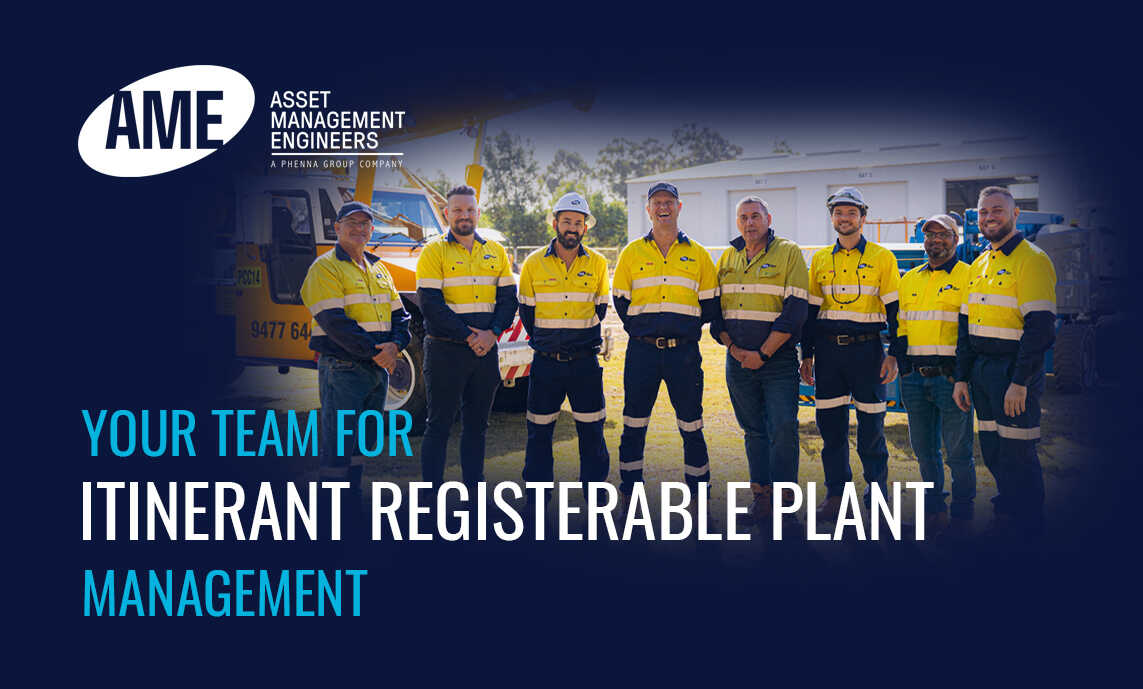
AME has delivered itinerant registered plant training for more than 10 years and supports mine operators, contractors and plant owners across the full management lifecycle.
Training
AME provides practical training for personnel who review, inspect and authorise itinerant plant. Training can be tailored to the plant types, risk profile and procedures used at an operation. For one Tier 1 client, completion of AME’s itinerant plant course has been embedded as a prerequisite for personnel who perform itinerant inspections.
➜ Learn more about AME’s Itinerant Registerable Plant Training
Management Systems and Procedures
AME can review an existing system or develop a fit-for-purpose itinerant plant procedure, including supplier requirements, plant registers, responsibility matrices, inspection workflows, acceptance checklists, approval methods, defect processes and document control arrangements.
Inspections and Ongoing Support
AME can assist with itinerant plant inspections, technical reviews and reporting, backed by practical support when site teams encounter documentation, condition or acceptance issues. AME can also help clients use Inspectivity to capture inspections, track third-party plant and manage corrective actions.
By integrating training, procedures, inspections and digital tracking, AME helps clients establish a consistent and defensible approach to itinerant plant management. Contact AME to discuss the requirements of your site or mobile plant fleet.
Frequently Asked Questions About Itinerant Registerable Plant
What are the most common problems with itinerant registerable plant arriving at workplaces?
Common problems include incorrect or missing documents, plant that has not been cleaned before delivery, incomplete inspection and maintenance records, mismatched identification, unresolved defects and limited knowledge of the requirements within parts of the plant-supply industry. Pre-delivery document verification is the best opportunity to identify these issues before they disrupt mobilisation.
Which checks should be completed before itinerant registerable plant is allowed to operate on site?
Verify that the item and its registration details match, and confirm that the supplier has had the plant regularly inspected by a competent person and deemed it safe to operate. Review inspection and maintenance status, then complete the site pre-entry checks for documentation, leaks, corrosion, damage, guards, and safety and warning devices. Record formal approval before use.
Which documents and records should accompany itinerant registerable plant?
The evidence will depend on the item, but may include registration documents, records of tests and calculations, inspection reports, maintenance and repair history, logbooks, OEM manuals, alteration documentation, defect close-out evidence and relevant operating information. The onboard file should contain the records required by the site procedure.
Who is considered competent to inspect or approve itinerant registerable plant?
For the site verification role, the PCBU should provide suitable training, information or instruction and define the person’s authority, often through in-house training and a verification of competency process. A separate high risk work licence is not required merely to conduct an itinerant plant inspection. Specialist technical or registration inspections may have additional competency requirements and should be assigned accordingly.
Are there common mistakes managers and supervisors should be aware of?
A common mistake is failing to establish a procedure that covers mobile plant not owned by the PCBU. Other weaknesses include treating registration as proof of current safety, accepting verbal assurances instead of controlled records, failing to track the plant after entry and leaving responsibilities unclear between the site and supplier.
How can workplaces establish an effective itinerant registerable plant management system?
Start with a site-specific procedure covering pre-delivery verification, pre-entry inspection, authorisation, recordkeeping, defect control and ongoing tracking. Assign clear roles and train the people who apply the process. AME can assist with the procedure, training, inspections, Inspectivity implementation and ongoing technical support.
Sources and Further Reading
Requirements should always be checked against current legislation, applicable codes and standards, manufacturer instructions and the circumstances of the individual plant item.
- Work Health and Safety (General) Regulations 2022 (WA) — regulations 39, 199, 213 and 237; Schedule 5 Division 2
- Work Health and Safety (Mines) Regulations 2022 (WA) — regulations 213, 237, 243 and 246; Schedule 5
- WorkSafe WA — Managing the Risks of Plant in the Workplace: Code of Practice
- WorkSafe WA — Items of Plant on a Mine Site
- WorkSafe WA — Plant Design and Registration
- WorkSafe WA — Duties of a Competent Person: Inspection and Maintenance of Plant